









An at-fault accident can affect far more than the cost of repairing your vehicle.
How Much Will My Insurance Go Up With an At-Fault Accident in Ontario?
According to MyChoice quote data, Ontario profiles with one at-fault accident had premiums about 26.6% higher, on average, than profiles with a clean driving record.
However, the increase will depend on several factors, such as:
- Your driving record: Generally, drivers with a clean record will have a lower premium increase compared to drivers who’ve been in multiple at-fault accidents.
- Accident forgiveness: An eligible Accident Waiver endorsement, commonly known as OPCF 39 in Ontario, may prevent the first qualifying at-fault accident from being surcharged while you remain with the same insurer. It does not erase the claim, and conditions vary.
- Cost of property damage involved: Your insurer may deem an accident a “minor accident” and protect your rates from increasing. No one can be injured, no insurer can make a payment, and the at-fault driver must pay for all damage. As of July 1, 2026, the damage must not exceed $5,000 per automobile, including associated property damage. This protection is limited to one minor accident within three years.
This rule is separate from Ontario’s police-reporting threshold.
What Is an At-Fault Accident?
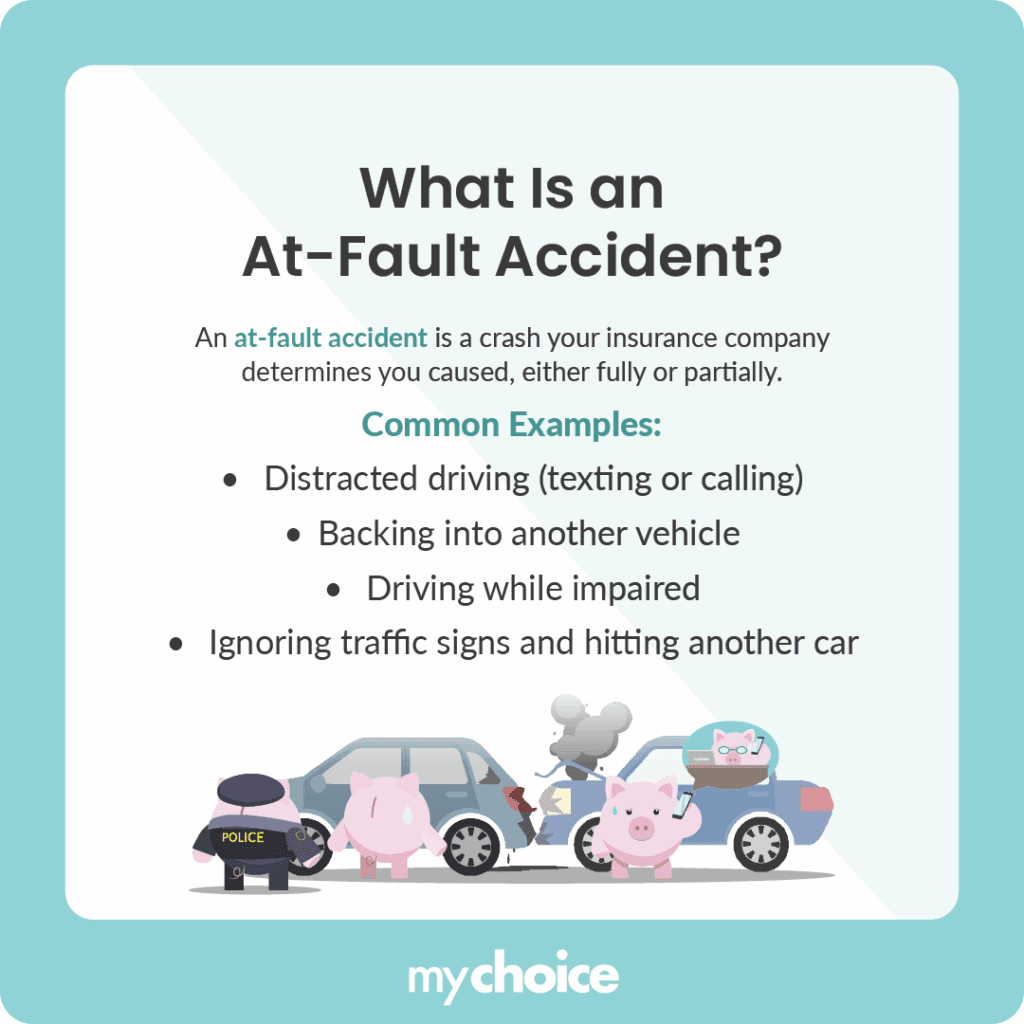
An at-fault accident is a car accident in which your insurance company determines you are wholly or partially responsible. This means your actions or inactions caused the accident.
Common car accidents where you may be considered at fault include:
- Distracted driving
- Backing into another car in a parking lot
- Driving while impaired
- Colliding with another car after failing to obey traffic signs
What Is No-Fault Insurance?
No-fault insurance means drivers deal directly with their own insurance companies to settle a car accident claim, instead of having their insurance companies dispute who’s responsible and who should pay. Ontario and other provinces adopted this insurance system to simplify claims and speed up driver compensation.
Despite the name, “no-fault insurance” does not mean nobody is found at fault. Insurers still assign fault under Ontario’s rules because the percentage can affect how vehicle damage is settled, whether a deductible applies and how an at-fault loss may be treated at renewal.
How Will a Car Insurance Company Determine Who Is at Fault?
In Ontario, a car insurance company will assign a claims adjuster to decide who is at fault in a car accident. Your claims adjuster may consider:
- Statements
- The police report
- Physical evidence
- Collision reconstruction
This information is compared with Ontario’s Fault Determination Rules.
What Are Ontario’s Fault Determination Rules?
Ontario’s Fault Determination Rules, a regulation under the Insurance Act, set out written and illustrated collision scenarios that insurers use to assign fault. The rules apply to insurance claims independently of any traffic charge or civil lawsuit.
Beyond covering collisions on roads and highways, the rules also provide guidelines for collisions in parking lots and at intersections. The regulation also outlines how to apply the rules in circumstances that aren’t covered by the diagrams.
If I’m Not at Fault, How Much Does Insurance Increase After an Accident?
If you’re found to be wholly not at fault, your premiums are unlikely to increase because of the accident.
How Long Does a Car Accident Stay on My Driving Record in Ontario?
An accident itself does not add demerit points to your driving record. Demerit points result from convictions and generally remain on your record for two years from the offence date.
Insurers may consider previous accidents and claims when you apply for coverage or renew a policy. Many insurance applications ask about at-fault accidents during the previous six years and Highway Traffic Act convictions during the previous three years. Questions vary, so answer the dates and periods shown on the application.
What Is Accident Forgiveness?
Accident forgiveness may prevent your first qualifying at-fault accident from increasing your premium with your current insurer.
Restrictions may include:
- You may need a specified number of years with a clean driving record.
- It usually applies only to the first qualifying at-fault accident.
- You may need to have been insured by the company for a minimum period.
- The protection may not follow you if you switch insurers.
- It does not remove the accident from your claims history.
- It does not cover increases caused by tickets or convictions.
Can a Pedestrian Be Found at Fault for a Car Accident?
Ontario’s Fault Determination Rules determine driver fault without reference to the actions of pedestrians.
A pedestrian may still be found contributorily negligent in a court case.