








Catalytic Converter Theft and Ways to Protect Yourself

3 minutes can save you hundreds. Enter your postal code below and join thousands of Canadians saving on car insurance.

Secure. No Spam. No Fees.

Why You Can Trust MyChoice

MyChoice serves as an independent intermediary between you, financial institutions and licensed professionals without any additional charge to our users. In the interest of transparency, we disclose that we partner with some of the providers we write about – we also list many financial services without any financial gain. MyChoice does not operate a financial institution or brokerage and to ensure accuracy, our content is reviewed by licensed professionals. Our unique position means that we hold no recurring stake in your policy, ensuring our mission to help Canadians make better financial decisions is free of bias or discrimination. 

Last updated on February 19, 2026

3 minute read

MyChoice follows a strict content review process designed to ensure reliable and unbiased information.

Catalytic Converters Theft & Insurance at a Glance

  • Despite a 19.1% drop in national auto theft in 2025, Canadians should prepare for a potential increase in catalytic converter theft amid rising metal prices.
  • A stolen catalytic converter typically triggers a check engine light and produces loud roaring exhaust noise. It immediately impacts fuel efficiency and performance.
  • Catalytic converter theft is covered only if you carry comprehensive, specified-perils, or all-perils coverage.
  • Vehicles under 36 months old may benefit from the Waiver of Depreciation (OPCF 43), which ensures replacement with a new factory part rather than a depreciated aftermarket component.
  • Installing a metal protective shield (“cat cage”) significantly reduces theft risk and may qualify for insurance discounts with certain providers.
How to Prevent Catalytic Converter Theft

What is a Catalytic Converter?

The catalytic converter is one of the most important components for controlling the polluting gas emissions from combustion engines. Its main function is to convert the polluting gases produced by burning fuel into less harmful gases. This item is located under the vehicle, close to the exhaust system piping, right next to the oxygen sensor.

Does My Car Insurance Cover Catalytic Converter Theft?

Yes, if you have comprehensive, all-perils, or specified-perils coverage included in your auto insurance policy, catalytic converter theft is typically covered. However, comprehensive coverage is not mandatory in Canada. If you live in an area with higher rates of theft or vandalism, make sure this coverage is included in your policy before purchasing insurance.

Why Do Thieves Steal Catalytic Converters?

Unless you’re a mechanical engineer, you probably don’t know why this particular car part can be so valuable to thieves. Here are the main reasons: 

The metal of which it is made

Catalytic converter theft is increasing because these converters contain platinum, palladium, and rhodium. Rhodium is the most valuable of these metals, often trading at several times the price of gold, and is the primary driver behind the high black-market value of stolen converters.

Thieves sell stolen converters for between $150 and $1,400, depending on the model, while victims can face total replacement costs, including specialized sensors, labour, and potential repairs to exhaust piping, ranging from $2,000 up to $5,000.

The ease of theft

You may wonder how someone could steal this car part. Well, catalytic converters are stolen quickly and easily. Typically, thieves wait until dark, so no one can see them. Then they crawl under the cars, cut the tube that a catalytic converter is attached to, pull it off, and voila.

The inability to track the stolen part

Moreover, most converters do not have a marking or a number to identify which car it belongs to. For this reason, even if police recover it, it is almost impossible to identify the car to which it belongs. This flaw also makes it easier for thieves to sell converters on the black market.

What Cars are More Likely to be Targeted for Catalytic Converter Theft?

High-clearance vehicles and hybrids remain top targets. According to 2024–2025 data, the Toyota RAV4 is the most stolen vehicle in Canada, while the Honda CR-V takes the top spot in Ontario. Hybrid models like the Toyota Prius are specifically targeted because their converters contain higher concentrations of precious metals compared to gas-only engines.

How to Know If Your Catalytic Converter Has Been Removed?

Losing the converter will trigger a check engine light and loud roaring noises. While a clogged or failing converter can cause engine overheating due to exhaust backpressure, a stolen converter (which creates an open exhaust) will not typically cause overheating, though it will immediately impact fuel efficiency and vehicle performance.

How Can I Protect My Vehicle?

The recommendations below will not prevent your converter from being stolen, but they will greatly reduce the likelihood of it happening.
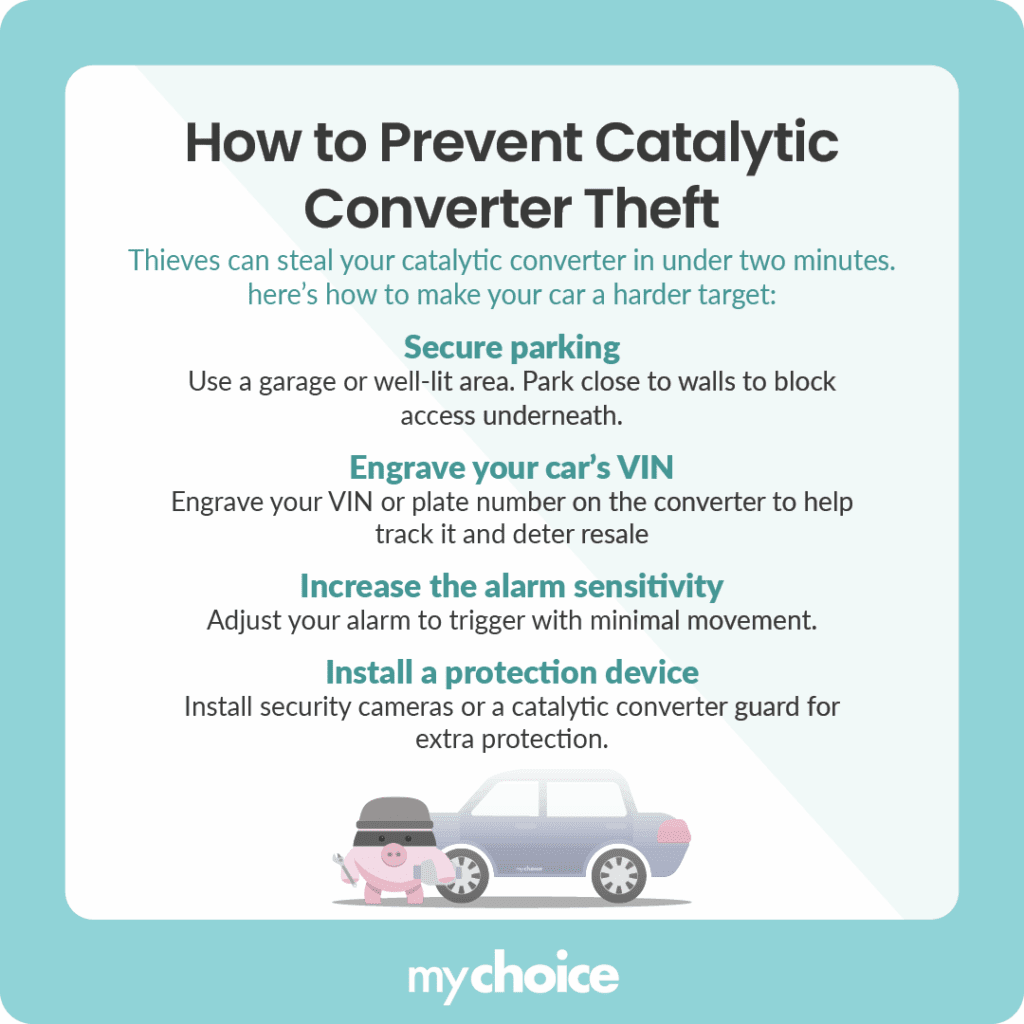
Use secure parking

Although it seems like a common-sense recommendation, it is not so much in reality. Vandals often take advantage of the dark to commit this crime, so finding safe, well-lit areas to park your car is important. Also, consider parking inside the garage or near a wall or door so that they cannot squeeze under the vehicle.

Engrave your car’s VIN

The authorities recommend recording on the catalytic converter either your license plate number or your vehicle’s identification number, known as a VIN. In addition to helping authorities track down stolen parts and find the owners, this practice can drastically limit a thief’s options for selling the part.

Increase the alarm sensitivity

Most car alarms can be set to increase their sensitivity. This way, when the thief tries to get under or manipulate any part of your car, the alarm will go off, instantly warning you. You can refer to the manual to learn how to set it up.

Install a protection device

Another option is to place video surveillance outside your home and ensure your car is always parked in an area captured by the cameras. This can also deter a thief from stealing the converter.

Key Advice from MyChoice

  • If your vehicle is less than 36 months old, ensure you have the Waiver of Depreciation (OPCF 43) endorsement. This ensures your insurer pays for a new factory replacement part rather than a depreciated aftermarket unit.
  • Installing a metal protective shield or “cat cage” is one of the most effective physical deterrents and may qualify you for additional insurance discounts with certain providers.
  • Make sure you carry comprehensive, specified-perils, or all-perils coverage. If you carry only Liability and Collision, you will have to pay the full repair bill out of pocket.

Congratulations! You made it to the end!

Now, here is the easy part: complete your quote in under 2 minutes

Discover More About

March 17, 2026
ADAS calibration is driving up car insurance claim costs. Learn how sensors, cameras, and repair delays are increasing premiums in Canada.
February 27, 2026
Chinese EVs are coming to Canada. Here’s how much BYD, MG and other models could cost to insure, with provincial breakdowns and projections.
February 10, 2026
Car repair costs rose 4.1% in Canada in 2025. View our breakdown of provincial repair trends, labour shortages, and what they mean for auto insurance rates.

Even More Ways To Save on Insurance