








Best Business Insurance Options as a Consultant

Get the right coverage for your business in just a few quick and easy steps. Secure your rate today!

Secure. No Spam. No Fees.

Why You Can Trust MyChoice

MyChoice serves as an independent intermediary between you, financial institutions and licensed professionals without any additional charge to our users. In the interest of transparency, we disclose that we partner with some of the providers we write about – we also list many financial services without any financial gain. MyChoice does not operate a financial institution or brokerage and to ensure accuracy, our content is reviewed by licensed professionals. Our unique position means that we hold no recurring stake in your policy, ensuring our mission to help Canadians make better financial decisions is free of bias or discrimination. 

Last updated on March 11, 2026

3 minute read

MyChoice follows a strict content review process designed to ensure reliable and unbiased information.

Business Insurance for Consultants At a Glance

  • Professional liability (Errors & Omissions) insurance is essential for consultants. It protects you if a client claims your advice, services, or missed deadlines caused them financial harm.
  • Commercial general liability (CGL) insurance helps protect you from claims of injury or property damage by others, especially if you meet clients in person or work in shared spaces.
  • If you handle client data, it is a good idea to consider cyber liability insurance. This coverage can help with costs from data breaches, hacking, and regulatory penalties.
  • As your consulting business grows, remember to review and update your insurance regularly.

What Are My Business Insurance Options as a Consultant in Canada?

Here’s a breakdown of the most relevant insurance types for consultants in Canada:

Insurance TypeWhat It CoversBest For
Professional Liability
(Errors & Omissions)
Legal costs and damages if a
client claims negligence, bad
advice, or missed deadlines
Any consultant providing
advice or services
Commercial General
Liability (CGL)
Injuries or property damage
caused to third parties
at your
workplace or theirs
In-person meetings, co-working
spaces, client site visits
Cyber Liability InsuranceCosts related to data breaches,
hacking, or stolen client information
IT consultants, marketers, anyone
handling client data
Business Contents
Insurance
Physical contents of your home
office or business location
Home-based consultants with
valuable equipment
Portable Electronics
Coverage
Laptops, tablets, and smartphones
on the go
Remote workers, travelling
consultants
Business Interruption
Insurance
Lost income if your business is
temporarily shut down due to
covered events
Consultants relying on physical
space or equipment
Legal Expense InsuranceLegal advice and coverage for
business-related legal disputes
All consultants, especially if
contracts are involved
Directors & Officers
(D&O) Insurance
Claims made against directors or
executives for mismanagement
Incorporated consultants with
a board or employees
Intellectual Property (IP)
Infringement Add-On
Defense against claims of IP
theft or unintentional
infringement
Creatives, marketers, designers,
developers

Is Consultant Insurance Tax Deductible?

Yes, insurance premiums for a consultant’s business purposes are typically tax-deductible in Canada. The Canada Revenue Agency CRA) allows you to deduct the cost of most business-related insurance from your self-employment income. This includes:

  • Property and contents insurance for your home office
  • Professional liability premiums
  • Cybersecurity-related coverage

Just make sure the policy is strictly for your consulting business activities, and keep receipts and policy documents on file in case you ever need to submit them to the CRA.

Sole Proprietor vs Incorporated: Does Your Insurance Strategy Need to Change?

Your insurance strategy definitely changes depending on the way your consulting business is structured, as it will significantly impact your legal responsibilities, financial risk, and ultimately the kind and amount of coverage you need. Let’s take a closer look at the difference each structure makes:
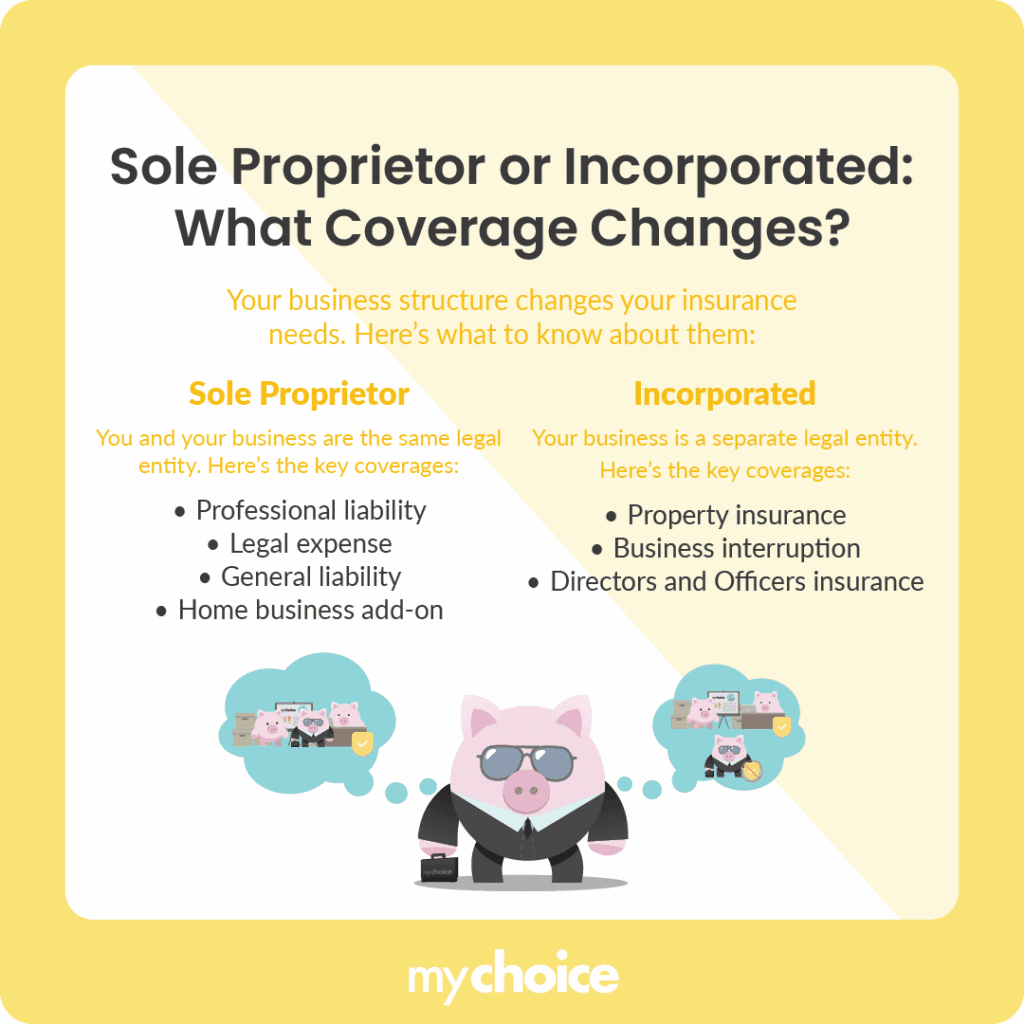
A sole proprietorship is the simplest, most common business structure for Canadian consultants, so it’s common for those just starting to be sole proprietors. But it comes with a major catch: you and your business are legally the same person.

That means if your business is sued, your personal assets like your house, savings, or car can be at risk. Likewise, if you miss a deadline or breach a contract, you’re personally liable. This means if you’re a sole proprietor, you should consider getting at least these key policies or add-ons:

  • Professional liability insurance: This protects you if a client claims your services or advice caused them harm.
  • Legal expense insurance: This covers the cost of hiring a lawyer or defending yourself in common disputes like contract disagreements or employment issues.
  • Commercial general liability: If someone visits your home office or you meet clients in person, this will protect you against third-party injury or property damage suits.
  • Home-based business endorsement: Your regular home insurance typically doesn’t cover business use. You may need to amend your policy or get separate contents insurance for your office gear.

If you’re incorporated, your consulting business is a separate legal entity. This provides some legal and financial protection as it’s the corporation that’s liable and not you personally. However, there are still situations where you can have personal liability, such as if you personally guarantee a loan or contract.

Consider getting these types of coverage if you’re an incorporated consultant:

  • Commercial property insurance or contents coverage: Since your office gear, computers, and files technically belong to the business, insuring those assets under a corporate policy is the right move.
  • Business interruption insurance: This covers lost income during a shutdown caused by insured events like fire or flood. It’s especially useful if you need a physical location or equipment to operate.
  • Directors & Officers (D&O) insurance: This protects you and other executives from lawsuits related to the management of the company like accusations of mismanagement or breach of duty.
Sole Proprietor vs Incorporated: Do You Need Different Insurance

Common Mistakes to Avoid When Choosing Consultant Insurance

Many consultants get insurance once, then never think about it again. However, this leads to a few pitfalls you definitely need to look out for:

Assuming home insurance covers your business:

Most home insurance policies exclude business use. For example, if your laptop is stolen or someone gets injured in your office, your home policy won’t cover those incidents.

Skipping professional liability insurance:

Even if you’re careful, a client could still accuse you of giving bad advice. This coverage type isn’t just for doctors or lawyers, it’s also essential for consultants.

Not updating your policy:

Your insurance should grow with your consultancy. If you take on bigger clients, expand your team, or start storing customer data, your coverage needs may change.

Buying whatever’s most affordable:

Low premiums can mean low coverage. Look for policies that suit your real risks, not just your budget.

Key Advice from MyChoice

  • Think about how and where you work when choosing insurance for your consultancy business. For example, if you’re often on the road, it may be a good idea to get portable electronics coverage. If you’re creating digital assets, consider IP protection.
  • If you work from home, part of your home insurance premium may also be tax-deductible, but only the portion related to business use. Talk to a tax adviser to get exact figures for this.
  • Some insurers offer specialized coverage for things like intellectual property disputes or contract reviews. These add-ons can be worth it if you’re in a creative or legal-heavy industry.

With extensive experience in Canadian insurance, Vitalii focuses on home, business, and travel coverage, helping consumers navigate policy options and make informed decisions through clear, practical guidance.

Congratulations! You made it to the end!

Now, here is the easy part: complete your quote in under 2 minutes

Discover More About

January 15, 2026
Business bankruptcies are down, but the economic stress has shifted around. Learn how this affects commercial insurance rates in 2026.
December 29, 2025
AI adoption is accelerating across Canadian businesses, but liability risk is rising just as fast. See which industries face the biggest risk in 2026.
November 5, 2025
Small businesses in Canada are increasingly facing cyber threats. Learn about financial, legal, and reputational costs of data breaches and how to stay protected.